
Learning the Quran is a meaningful journey that requires proper guidance, regular practice, and a clear understanding of pronunciation and recitation rules. An Online Quran Academy makes this learning process accessible to students who may not have a qualified Quran teacher nearby. Through online classes, students can learn from certified tutors while studying from the comfort of their homes.
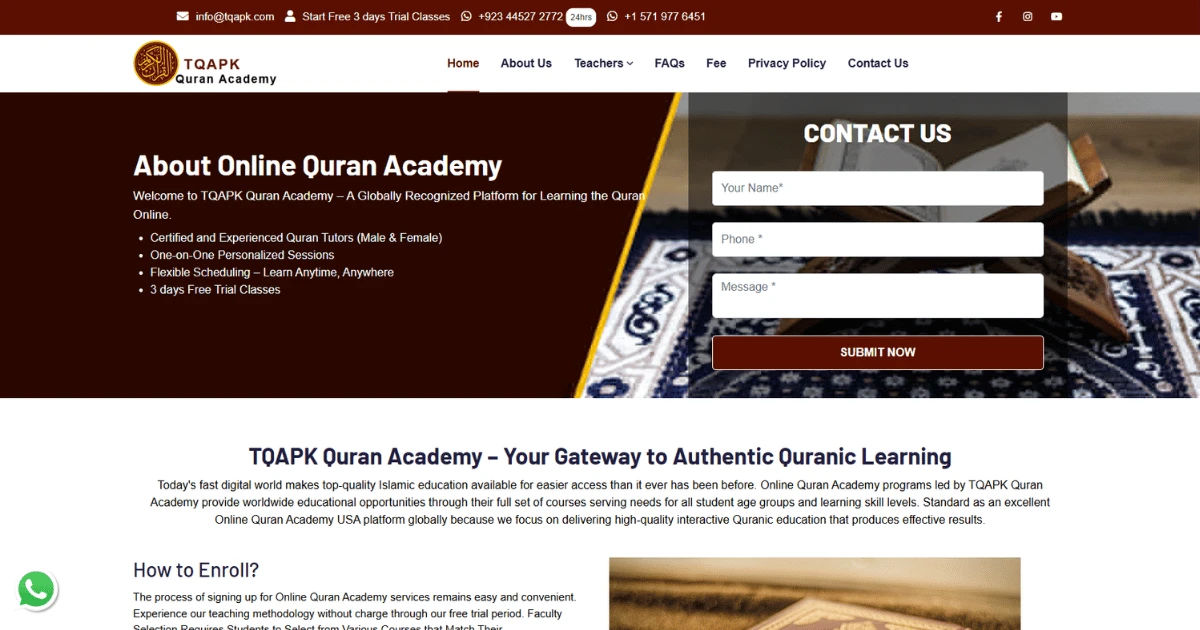
Modern online Quran education combines traditional teaching methods with digital technology. Students can attend live lessons using a computer, tablet, or smartphone. They can communicate directly with their tutor, practice recitation, ask questions, and receive corrections during the lesson.
For families with busy schedules, online learning can also provide greater flexibility. Parents can select suitable class timings, while students can follow a structured learning program according to their age and current Quranic knowledge.
What Is an Online Quran Academy?
An Online Quran Academy is a digital learning platform that provides Quran education through live internet-based classes. Instead of traveling to a mosque, Islamic center, or private tutor's home, students attend lessons remotely.
These academies commonly offer courses in Quran reading, Tajweed, memorization, Arabic basics, Islamic studies, and other areas of Quranic education. The exact courses differ from one academy to another.
Most classes are conducted individually or in small groups. One-to-one lessons can give students more direct attention because the tutor can focus on their specific strengths and weaknesses.
The primary purpose is not simply to help students finish lessons. A good academy aims to develop accurate Quran reading habits that students can continue using throughout their lives.
How Does the Online Learning Process Work?
The process usually begins when a parent or student contacts an Online Quran Academy and chooses a suitable course. The academy may ask about the student's age, previous Quran experience, preferred class schedule, and learning goals.
Some academies arrange an introductory or assessment session. This allows the tutor to determine whether the student can recognize Arabic letters, read words, apply basic Tajweed rules, or recite selected surahs.
After the assessment, the academy recommends an appropriate course and learning level. The student is then assigned a tutor and receives a regular class schedule.
Step 1: Registration
The first step is registration. Parents or adult students generally provide basic information and select a preferred course.
They may also choose the number of classes per week. For younger children, shorter and more frequent sessions can sometimes be easier to manage than long lessons.
Step 2: Initial Assessment
An assessment helps the tutor understand the student's current abilities.
For example, a beginner may need to start with Arabic letters and their sounds. Another student may already read the Quran but struggle with pronunciation or Tajweed.
This assessment prevents students from being placed in lessons that are too easy or too difficult.
Step 3: Tutor Assignment
The academy assigns a qualified tutor based on the student's course and requirements.
Some programs allow families to request a male or female tutor, depending on their preferences and the student's age. A suitable tutor should have strong Quranic knowledge, good communication skills, patience, and teaching experience.
Step 4: Live Online Classes
Classes usually take place through video or audio communication software. The student and tutor communicate in real time.
The tutor may share a digital Quran page, textbook, presentation, or other educational material. The student reads aloud while the tutor listens carefully.
This live interaction is important because Quranic pronunciation cannot always be learned effectively through recorded videos alone.
Step 5: Regular Practice and Feedback
During each lesson, the tutor identifies mistakes and explains how to correct them.
Students may be asked to repeat difficult words several times. The tutor can demonstrate the correct pronunciation and then ask the student to imitate it.
Regular feedback helps prevent incorrect reading habits from becoming permanent.
Why Are Certified Tutors Important?
A major advantage of studying through an Online Quran Academy is the possibility of learning from certified tutors.
Quran education requires accuracy. A teacher needs to understand pronunciation, recitation principles, Tajweed rules, and the correct way to guide students through different levels.
Certification can indicate that a tutor has completed relevant Quranic or Islamic studies and has demonstrated knowledge in a particular area. However, certification alone should not be the only factor families consider.
Teaching ability is equally important. A knowledgeable tutor must also be able to explain concepts clearly to children, teenagers, and adults.
Knowledge and Qualifications
Certified tutors generally have formal training in Quran recitation or related Islamic studies.
Depending on the course, a tutor may have qualifications in Tajweed, memorization, Arabic, or Quran recitation. Students should ask the academy about tutor qualifications before enrolling.
Pronunciation Correction
Correct pronunciation is one of the most important parts of Quran learning.
A tutor listens to the student's recitation and identifies issues involving Arabic letters, vowel sounds, articulation points, and other reading details.
Online lessons can support this process because the tutor hears the student reading live.
Personalized Teaching
Every student learns differently. Some students progress quickly, while others need additional repetition.
A certified tutor can adjust the lesson according to the student's level. This personalized approach can make learning more comfortable and productive.
What Courses Can Students Take?
An Online Quran Academy may provide several different courses depending on the needs of its students.
Quran Reading
Quran reading courses are suitable for beginners and students who want to improve their fluency.
Beginners may start by learning Arabic letters, joining letters together, recognizing vowel signs, and reading simple words.
As their skills improve, they can move toward reading complete verses.
Tajweed
Tajweed teaches students how to recite the Quran correctly according to established pronunciation rules.
Students may learn concepts related to elongation, stopping and starting, nasal sounds, pronunciation points, and other recitation principles.
Tajweed lessons often require repeated practice because students need to apply the rules while reading actual Quranic verses.
Quran Memorization
Students who want to memorize the Quran can follow a structured Hifz program.
The tutor may assign a manageable portion for memorization and review previously learned material during each class.
Regular revision is essential because memorization becomes stronger when older portions are repeatedly practiced.
Arabic Learning
Some academies offer basic Arabic courses alongside Quran studies.
Learning Arabic vocabulary and grammar can help students develop a deeper understanding of Quranic words and expressions.
Islamic Studies
Children may also study basic Islamic teachings, manners, supplications, stories of the prophets, and essential religious knowledge.
These lessons can complement Quran education and help students connect what they read with their everyday lives.
How Do Online Classes Help Children?
An Online Quran Academy can be especially useful for children whose parents want a structured Quran learning routine.
Children often benefit from individual attention. During a private lesson, the tutor can immediately correct pronunciation and encourage the child to stay focused.
Parents can also monitor their child's progress more easily when lessons are conducted from home.
However, parents should create a quiet learning environment. A child sitting near television noise, mobile games, or frequent interruptions may have difficulty concentrating.
What Technology Is Needed?
Online Quran classes usually do not require expensive equipment.
A reliable internet connection, smartphone, tablet, or computer is often enough. A headset can also improve sound quality and reduce distractions.
The student should sit somewhere with sufficient lighting and minimal background noise.
Parents should test the equipment before the first regular class. Technical problems can interrupt learning and reduce valuable lesson time.
How Are Class Schedules Managed?
Flexibility is one of the main reasons families choose an Online Quran Academy.
Traditional classes may have fixed schedules that are difficult for students with school, work, or family responsibilities. Online programs can sometimes provide several available time slots.
Students may select classes that fit around school hours, homework, extracurricular activities, and other responsibilities.
Regular attendance is still important. Flexible scheduling does not mean that students should frequently miss lessons.
How Is Student Progress Monitored?
A professional academy should have a system for monitoring student progress.
Tutors may keep records of completed lessons, memorized portions, Tajweed topics, reading ability, and areas that require improvement.
Some academies provide regular progress reports to parents. These reports can help families understand whether the student is improving at an appropriate pace.
Progress should not be measured only by how quickly a student completes a textbook. Accurate pronunciation, confidence, understanding, consistency, and proper application of rules are also important.
What Should Parents Look for in an Academy?
Choosing the right Online Quran Academy requires careful consideration.
Parents should investigate the academy's teaching methods, tutor qualifications, class structure, communication process, and student support.
Qualified Teachers
Ask whether teachers have formal Quranic qualifications and teaching experience.
A tutor who understands both the subject and effective teaching methods can make a significant difference.
Trial Classes
A trial lesson can help parents and students evaluate the learning experience.
During the trial, observe whether the tutor is patient, respectful, attentive, and capable of explaining mistakes clearly.
Flexible Scheduling
Check whether class times can accommodate the student's regular routine.
A schedule that is convenient from the beginning is easier to maintain over the long term.
Regular Feedback
The academy should provide some method of communicating progress.
Parents should know what their child is learning, where difficulties exist, and what should be practiced between lessons.
Safe Learning Environment
Children should receive lessons in a respectful and professionally managed environment.
Parents should understand the academy's communication policies and know how teachers interact with students.
What Are the Benefits for Adults?
Online Quran education is not limited to children.
Adults who never had the opportunity to study properly can begin at a comfortable level. Others may already know how to read but want to improve Tajweed or memorization.
The flexibility of an Online Quran Academy can be particularly helpful for working adults.
They can schedule lessons before work, after work, or during another suitable period, depending on the academy's availability.
Adults can also choose learning goals based on their personal needs rather than following the same pace as younger students.
Is Online Quran Learning Effective?
Online learning can be effective when students receive live instruction, qualified guidance, regular practice, and consistent feedback.
The quality of the experience depends heavily on the academy and tutor.
Simply joining an online class does not guarantee progress. Students need to attend regularly and practice between lessons.
Parents can improve results by encouraging children to revise what they learned instead of relying entirely on class time.
A supportive tutor can make lessons engaging without sacrificing educational quality.
How Can Students Get Better Results?
Students should approach Quran lessons as a regular part of their routine.
Even a few minutes of daily practice can reinforce what was learned during a live class.
Students should also feel comfortable asking questions. If a pronunciation rule is confusing, they should ask the tutor to explain it again.
Listening carefully and repeating the tutor's examples can also improve pronunciation.
For memorization students, revision should receive as much attention as new material. Memorizing new verses without reviewing previous portions can make retention more difficult.
Common Challenges of Online Quran Classes
Although an Online Quran Academy offers many advantages, online learning can have challenges.
Internet problems may occasionally interrupt classes. Young children can also become distracted more easily when studying from home.
Some students may initially feel uncomfortable reading aloud through a screen.
These challenges can usually be reduced with preparation. A stable internet connection, quiet room, suitable device, and consistent schedule can make lessons smoother.
Parents can also stay nearby during children's early classes to provide technical assistance when needed.
Frequently Asked Questions
Can beginners join an Online Quran Academy?
Yes. Beginners can usually start with basic Arabic letters, pronunciation, and Quran reading fundamentals.
Are certified tutors available for children?
Many academies offer tutors specifically trained to work with children. Parents should ask about qualifications and teaching experience before enrolling.
Can adults learn Quran online?
Yes. Online classes can be suitable for adults at beginner, intermediate, and advanced levels.
How long does it take to learn Quran reading?
The timeframe varies. It depends on the student's starting level, age, attendance, practice habits, and lesson frequency.
Can students learn Tajweed online?
Yes. Live instruction allows tutors to listen to recitation and provide immediate corrections.
Do online classes require a computer?
Not necessarily. Many programs can work through smartphones or tablets, although a larger screen may provide a more comfortable learning experience.
Conclusion
An Online Quran Academy provides a practical way for children and adults to receive Quran education without traveling to a physical classroom. By combining live instruction, qualified tutors, flexible schedules, and digital learning tools, online Quran education can fit into many modern lifestyles.
The most important part of the experience is the quality of teaching. Certified tutors can help students develop accurate pronunciation, understand Tajweed principles, improve reading fluency, and build consistent Quranic habits.
Families should take time to compare academies before making a decision. Tutor qualifications, teaching experience, course options, scheduling flexibility, progress tracking, and student safety should all be considered.
Students should also remember that successful Quran learning requires consistency. Attending classes is only one part of the process. Regular revision, careful listening, practice, and patience are equally important.
With the right tutor and a structured program, online Quran education can become a rewarding part of a student's daily routine. Whether the goal is to learn basic Quran reading, improve Tajweed, memorize surahs, or develop a stronger connection with Quranic teachings, a well-organized online program can provide the guidance and support needed to move forward with confidence.