
Commercial vapour tight lighting fixtures cost roughly 40-70% more than a standard wrap fixture of comparable output. That premium is easy to cut when a project budget tightens, and it gets cut constantly. Sometimes that’s the right call. In specific environments it’s a decision that costs three times what it saves.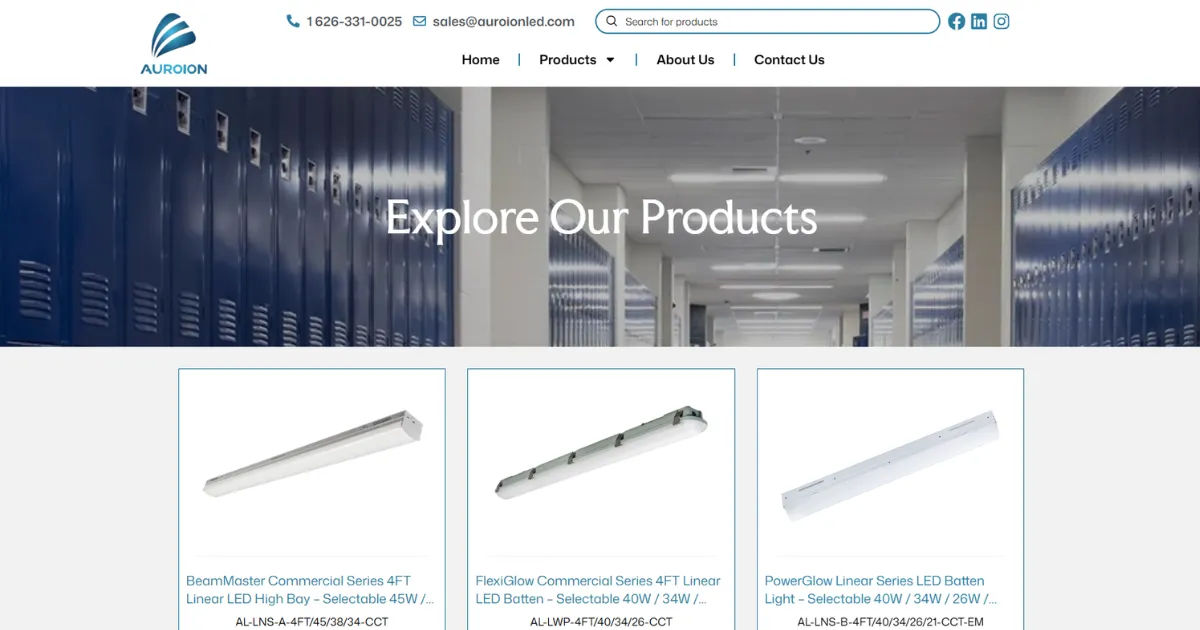
The question is not whether vapour tight is better — it obviously is. The question is where the difference actually shows up on a maintenance budget.
What the Premium Buys
A standard commercial wrap fixture has an acrylic or polycarbonate diffuser clipped to a housing with no meaningful seal, open cable entries, and electronics exposed to whatever the room contains. It costs less because there is less in it.
A commercial vapour tight fixture light adds a moulded gasket, multiple stainless clips or latches, sealed cable glands, a heavier housing, and testing to an IP standard. That’s real material and real manufacturing cost, not a marketing premium.
Where It Pays Back Fast
Food processing and commercial kitchens. Daily wash-down plus grease-laden steam. Standard wraps in these environments typically last 2-4 years before water ingress or corrosion takes them. Vapour tight units run 10+ years. On a 60-fixture kitchen, that’s roughly two full replacements avoided over a decade, plus the labour, plus the NSF compliance issue that a non-listed fixture creates at audit.
Parking structures. Underestimated constantly. Vehicle exhaust deposits, road salt carried in on tyres, condensation on concrete decks in spring and autumn, plus periodic washdowns. Standard fixtures corrode at the electrical connections and fail unpredictably. The replacement labour is the expensive part, since every fixture needs a lift.
Car washes and vehicle service bays. Obvious once stated, still specced wrong regularly. Constant water, detergent chemicals, high humidity. Nothing but vapour tight survives.
Cold storage. Condensation cycling every time a door opens. Water that gets inside a fixture in a freezer turns to ice and expands.
Agricultural and animal housing. High ammonia, high humidity, frequent hosing. Corrosion attacks fixtures from both outside and inside.
Where the Premium Is Wasted
Dry, climate-controlled interiors with no contaminant and no wash-down. General offices, dry storage, retail floors, corridors. A standard wrap or troffer will run 12-15 years in those conditions, and paying vapour tight prices there is money that could have gone to better optics or a controls upgrade.
Two grey areas worth thinking about:
Loading docks. Partly exterior, dust from vehicle traffic, occasional weather ingress. I’d spec vapour tight, but IP65 rather than IP66, and prioritise IK08 impact resistance because forklift strikes are the more likely failure.
Mechanical and plant rooms. Humid, hot near the ceiling, occasional pipe leaks. Vapour tight is cheap insurance given how rarely these spaces are inspected.
Running the Numbers on Your Own Building
The comparison worth doing takes ten minutes. For any space you’re unsure about:
Take the fixture count, the price difference per unit, and the installed labour cost per fixture. Then estimate how many years a standard fixture will realistically last in that environment. If it’s under six years, vapour tight wins on replacement labour alone, before you count downtime, disruption or the cost of a failed audit.
For a 40-fixture wash-down area with a $45 per-unit premium, the extra cost is $1,800. One round of replacing 40 standard fixtures at $75 installed labour is $3,000 in labour alone. The premium pays for itself on the first avoided replacement cycle.
Auroion LED supplies commercial vapour tight lighting fixtures for parking garages and kitchens in IP65 and IP66 ratings, and commercial LED strip lights for dry interior spaces where the sealed housing genuinely isn’t needed.
Frequently Asked Questions
How much more do commercial vapour tight fixtures cost?
Typically 40-70% more than a standard wrap fixture of comparable output. In wash-down or corrosive environments that premium is usually recovered on the first avoided replacement cycle, since labour often exceeds the fixture cost.
Do I need vapour tight fixtures in a dry warehouse?
Generally no, unless the space is dusty. In clean, dry storage with no wash-down, standard commercial fixtures perform well for 12-15 years. Save the vapour tight budget for the wash bays, kitchens and cold rooms.
What’s the difference between damp-rated and wet-rated fixtures?
Damp-rated fixtures handle humidity and condensation but not direct water contact. Wet-rated fixtures are built for direct exposure — rain, hosing, wash-down. Any area that gets cleaned with water needs wet-rated, not damp-rated.
Are vapour tight fixtures eligible for utility rebates?
Most DLC-listed models are. Rebates commonly run $15-40 per fixture depending on the utility and the lumen package, and DLC Premium products with integrated controls often qualify for higher amounts. Check your local qualified products list first.