
Football is a demanding sport that requires constant movement, speed, strength, and concentration. Players can spend an entire game running, blocking, tackling, and changing direction. During all this activity, body temperature rises and sweat builds up. This is why clothing that allows heat and moisture to escape is so important. A well-designed custom football uniform can provide comfort while also giving a team a professional and unified appearance.
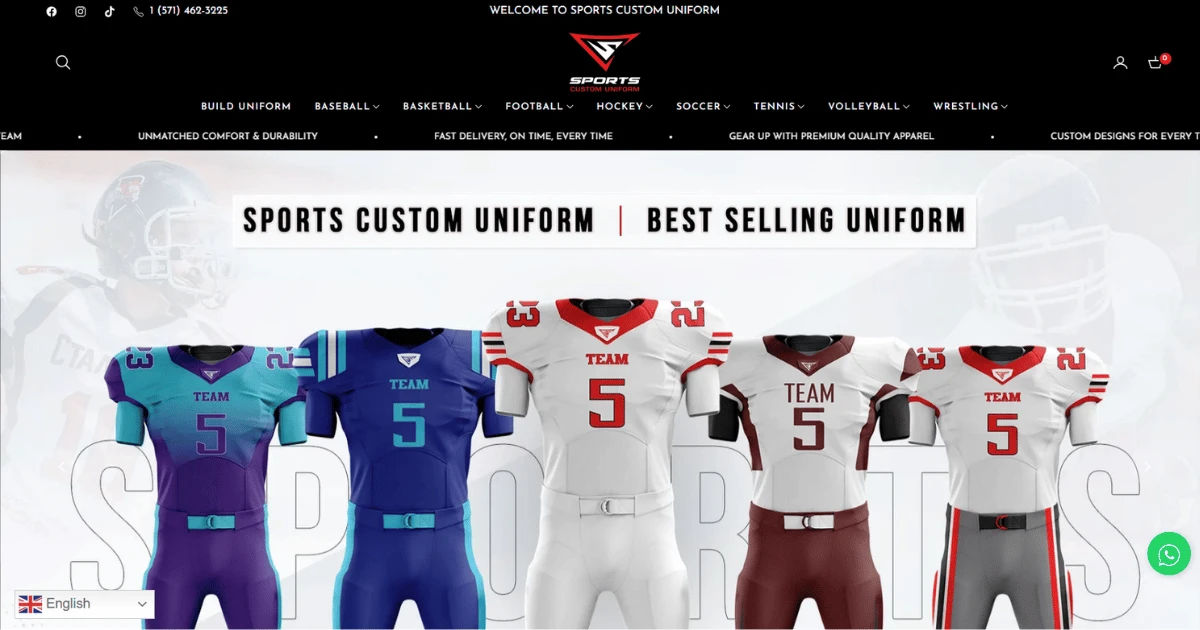
Breathability is not simply about making a jersey feel light. It involves the fabric, construction, ventilation, fit, stitching, and overall design of the uniform. When these elements work together, players can stay more comfortable during practices and games.
A custom football uniform is especially useful because teams can choose materials, cuts, and ventilation features based on their specific needs. A youth team playing in warm weather may need different features from a professional-level team playing in cooler conditions. Understanding what makes football apparel breathable can help teams make better choices.
What Does Breathability Mean in Football Uniforms?
Breathability refers to a fabric's ability to allow air and moisture vapor to pass through it. In simple terms, breathable clothing helps heat escape from the body while allowing fresh air to circulate.
When a player exercises, the body produces heat. It also releases sweat to cool itself. If the uniform traps sweat against the skin, the player may feel hot, heavy, and uncomfortable.
A breathable uniform helps reduce this problem. It allows moisture to move away from the skin and gives heat a path to escape. This can make a major difference during long practices and competitive games.
Breathability should not be confused with simply having a thin fabric. Some lightweight materials may still trap moisture if they do not have the right structure. Good football apparel combines lightweight construction with effective moisture management and ventilation.
The Importance of Fabric Choice
The fabric is one of the most important factors affecting breathability. Modern football uniforms commonly use synthetic materials because they can be engineered for moisture management, durability, and airflow.
Polyester
Polyester is widely used in football apparel because it is lightweight, durable, and capable of supporting moisture-wicking technology. It can move sweat away from the skin and help it evaporate more quickly.
High-quality polyester can also maintain its shape after repeated washing. This makes it practical for teams that train and compete frequently.
Polyester Blends
Some uniforms use polyester combined with other fibers. Blended fabrics can provide a balance between stretch, comfort, durability, and moisture control.
The exact blend can influence how the garment feels against the skin and how effectively it handles perspiration.
Mesh Fabrics
Mesh is another important material for ventilation. Its open construction creates small spaces through which air can move.
Mesh panels are often placed in areas where players generate significant heat, such as the sides, underarms, or upper back. These panels can increase airflow without requiring the entire uniform to have an open structure.
Moisture-Wicking Technology
A breathable football uniform should manage sweat effectively. This is where moisture-wicking technology becomes important.
Moisture-wicking fabrics are designed to move perspiration away from the skin. Instead of allowing sweat to remain concentrated in one area, the fabric spreads moisture across a larger surface.
The moisture can then evaporate more efficiently.
This process can help players feel drier and more comfortable. It can also prevent a jersey from becoming excessively heavy during a game.
For teams choosing a custom football uniform, moisture-wicking fabric should be one of the first features to consider, especially when games are played in hot or humid conditions.
Ventilation Panels Improve Airflow
Strategically placed ventilation panels can make a major difference in uniform comfort. These panels are usually made from mesh or another highly breathable material.
Underarm Ventilation
The underarm area experiences significant heat and moisture because of continuous arm movement. Mesh panels in this location can help hot air escape.
Side Panels
Side panels can create additional airflow around the torso. They are particularly useful for players who spend long periods running.
Back Ventilation
The upper and middle back can become warm because of body heat and protective equipment. Breathable sections in this area can improve circulation.
A thoughtful ventilation design does not mean adding mesh everywhere. The goal is to place breathable sections where they provide the greatest benefit while maintaining durability.
The Role of Uniform Fit
Fit is another major part of breathability. A uniform that is too tight may restrict airflow and trap heat close to the body.
A uniform that is excessively loose can also create problems. Extra fabric may interfere with movement or become uncomfortable during contact.
The ideal fit provides enough room for natural movement without creating unnecessary bulk. Football players need to raise their arms, sprint, bend, turn, and make contact without feeling restricted.
A properly fitted custom football uniform can support these movements while allowing ventilation features to work effectively.
Lightweight Construction
Weight matters when players are already carrying equipment such as helmets, shoulder pads, gloves, and protective padding.
A heavy jersey can add unnecessary discomfort, particularly when it absorbs sweat. Lightweight fabrics reduce this burden and can help players move more naturally.
However, lightweight does not automatically mean better. Football clothing must still withstand repeated contact, stretching, washing, and outdoor conditions.
The best designs balance low weight with durability. Manufacturers can achieve this by selecting suitable fabrics and using strong construction techniques.
Breathable Stitching and Construction
Even the best fabric can lose some of its benefits if the garment is poorly constructed.
Excessive layers of material, thick seams, or poorly positioned stitching can create additional heat and discomfort. Modern football apparel can use lightweight stitching methods and carefully positioned seams to reduce these issues.
Flat seams can also improve comfort by reducing rubbing against the skin. This is particularly valuable during long training sessions.
The construction of a custom football uniform should therefore be considered alongside the fabric rather than treated as a separate issue.
Stretch and Freedom of Movement
Football requires explosive movement. Players sprint, jump, tackle, block, and change direction rapidly.
A uniform needs enough flexibility to accommodate these movements. Stretchable fabrics or strategically designed panels can improve mobility without making the clothing feel loose.
Good stretch can also prevent unnecessary pulling and tension in the fabric. When a garment moves naturally with the body, ventilation areas are more likely to remain properly positioned.
This combination of flexibility and airflow can make the uniform more comfortable throughout a game.
Why Climate Matters
The best breathable design depends partly on the environment.
A team playing in a hot climate may prioritize maximum ventilation and moisture management. Players competing in cooler weather may require a different balance between airflow and warmth.
Humidity also affects comfort. When humidity is high, sweat evaporates more slowly. In such conditions, moisture-wicking materials and ventilation become even more important.
Teams should consider the typical weather conditions where they train and play before selecting their apparel.
Color and Heat Absorption
Uniform color can also influence how hot clothing feels under direct sunlight. Darker colors generally absorb more solar radiation than lighter colors, which can contribute to increased surface temperature.
However, color is only one part of the overall equation. A dark uniform made from an excellent moisture-wicking and breathable fabric may still feel more comfortable than a poorly designed light-colored uniform.
Teams should therefore consider color alongside fabric, ventilation, fit, and construction.
How Customization Affects Breathability
Customization allows teams to create apparel that reflects their identity while selecting practical performance features.
Logos, numbers, names, stripes, and other graphics can be added using different printing or application techniques. The placement and type of customization should be considered carefully.
Large areas of heavy material can potentially reduce airflow in specific sections. Lightweight printing and carefully planned graphic placement can help preserve comfort.
A quality custom football uniform should combine visual design with athletic performance rather than focusing exclusively on appearance.
Durability Versus Breathability
Football uniforms must survive demanding conditions. Players frequently experience contact with opponents, grass, artificial turf, and other surfaces.
Highly open fabrics can provide excellent airflow but may not always offer the durability required for repeated contact.
Manufacturers therefore need to find a balance. A good football uniform can use stronger fabric in high-contact areas while incorporating mesh or lighter materials where ventilation is more important.
This approach allows teams to receive both durability and comfort.
Breathability and Player Performance
Comfort can influence how players experience a game. When players are distracted by excessive heat, sweat, or uncomfortable clothing, maintaining concentration can become more difficult.
A breathable uniform cannot replace fitness, training, hydration, or proper preparation. However, it can reduce one source of physical discomfort.
When clothing remains relatively light and manages moisture effectively, players may feel more comfortable during extended periods of activity.
For this reason, breathability should be considered a performance feature rather than merely a fashion preference.
Choosing the Right Fabric Weight
Fabric weight is another factor teams should evaluate. Very heavy fabrics may feel uncomfortable in hot conditions, while extremely lightweight materials may not provide enough durability.
A medium-weight performance fabric can often provide a useful balance.
The appropriate weight depends on the playing environment, level of contact, season, and expected frequency of use. Teams should think about their specific requirements instead of assuming that the lightest available fabric is automatically the best option.
Breathability During Practice
Uniform breathability is just as important during training as it is during competition.
Practice sessions can last for hours and may involve repeated drills, conditioning exercises, and scrimmages. Players can produce considerable heat and sweat during these sessions.
A breathable custom football uniform can make long practices more manageable by helping regulate moisture and airflow.
Teams that train several times per week should also consider how easily uniforms can be washed and dried. Quick-drying materials can be especially convenient for active players.
Caring for a Breathable Uniform
Proper care helps preserve the performance characteristics of football apparel.
Players should follow the manufacturer's washing instructions. Excessive heat from dryers or ironing can damage certain performance fabrics, prints, and elastic components.
Using suitable detergents and avoiding unnecessary fabric softeners can also help maintain moisture-wicking performance, depending on the fabric manufacturer's recommendations.
Uniforms should be allowed to dry properly after use. Leaving sweaty clothing in a closed sports bag for extended periods can create unpleasant odors and may contribute to fabric deterioration.
Good maintenance can extend the useful life of a breathable uniform.
Common Mistakes Teams Should Avoid
One common mistake is choosing uniforms based only on appearance. Attractive graphics and team colors are important, but they should not come at the expense of player comfort.
Another mistake is selecting fabric without considering the local climate. A material that works well in a cool environment may not be ideal for hot and humid conditions.
Teams should also avoid assuming that all polyester fabrics have identical performance. Fabric quality, construction, weave, and finishing technology can vary considerably.
Finally, incorrect sizing can reduce comfort even when the fabric itself is highly breathable.
What to Look for When Ordering
Before ordering football apparel, teams should evaluate several features.
Look for moisture-wicking fabric, strategic mesh panels, lightweight construction, comfortable seams, appropriate stretch, and a suitable fit.
It is also useful to ask about durability and washing requirements. Teams that play frequently need apparel capable of handling repeated use.
When selecting a custom football uniform, teams should also review samples whenever possible. Feeling the fabric and examining the stitching can provide useful information that cannot always be obtained from pictures.
Questions to Ask a Uniform Supplier
A reliable supplier should be able to explain the materials used in its football apparel.
Teams can ask whether the fabric is moisture-wicking, where ventilation panels are positioned, how the garment is constructed, and how the material should be washed.
It is also worth asking whether different fabric options are available. Some suppliers may provide several materials designed for different climates or performance requirements.
Understanding these details before placing a large order can help prevent costly mistakes.
The Best Combination of Comfort and Performance
Breathability is the result of several features working together. Fabric alone cannot guarantee a comfortable football uniform.
A strong design combines moisture management, ventilation, lightweight materials, proper fit, flexible construction, and durable stitching.
The best custom football uniform is therefore one that supports the player without becoming a distraction. It should allow natural movement, manage sweat, and provide enough airflow while maintaining the durability needed for football.
Conclusion
Breathability is an important feature of modern football apparel because players generate significant heat and sweat during training and competition. A well-designed uniform helps manage these conditions by allowing air to circulate and moisture to move away from the skin.
Fabric selection is one of the biggest factors. Polyester, performance blends, and mesh can provide useful combinations of moisture management, airflow, flexibility, and durability. However, fabric is only the beginning.
Ventilation placement, uniform fit, stitching, weight, stretch, customization methods, and climate all contribute to the final result. Teams should consider these elements together rather than selecting apparel based solely on appearance or price.
A high-quality custom football uniform gives teams the opportunity to combine their colors and identity with practical performance features. By selecting breathable materials, strategically positioned ventilation, comfortable construction, and an appropriate fit, teams can create apparel that looks professional while supporting players throughout demanding sessions.
Ultimately, breathable football apparel is about creating a better experience on the field. Players need clothing that moves with them, handles sweat, and remains comfortable through intense activity. When performance and design are properly balanced, a football uniform becomes more than team clothing—it becomes an important part of a player's overall game-day experience.