
Choosing the right countertop material is one of the most important decisions when planning a kitchen or bathroom renovation. Homeowners want a surface that looks beautiful, lasts for years, requires minimal maintenance, and fits their budget. Quartz has become a popular option because it combines an attractive appearance with impressive durability. However, is it the right choice for homes in Florida? 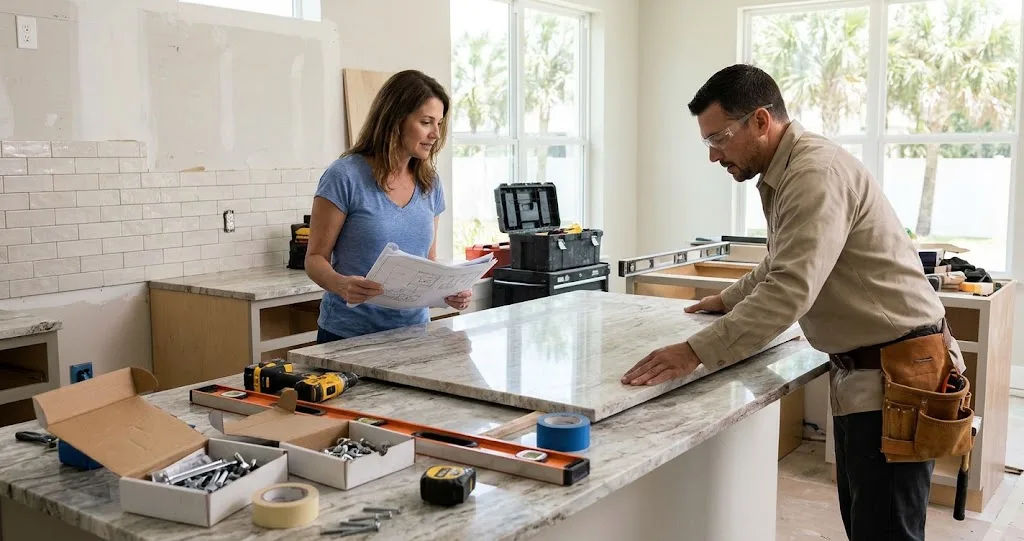 For homeowners considering countertop installation Jacksonville FL, quartz deserves serious consideration. Its nonporous surface, wide selection of colors, and resistance to everyday stains make it suitable for busy kitchens and bathrooms. It can also provide a clean, modern appearance that complements many interior design styles.
Jacksonville's warm, humid climate makes countertop selection especially important. Materials must handle regular household use while maintaining their appearance despite changes in indoor conditions. Although quartz offers several advantages, it also has limitations that homeowners should understand before making a purchase.
This comprehensive guide explores the benefits, disadvantages, maintenance requirements, costs, and design possibilities of quartz countertops. It also explains what homeowners should consider before choosing quartz for their next renovation project.
Quartz Countertops
Quartz countertop installation Jacksonville FL are engineered stone surfaces made primarily from natural quartz crystals combined with resins, pigments, and other materials. Manufacturers use specialized processes to create solid slabs with consistent patterns, colors, and textures.
Unlike natural granite or marble, quartz is manufactured. This allows manufacturers to control its appearance and produce surfaces that resemble natural stone, concrete, or other decorative materials.
Most engineered quartz products contain a high percentage of natural quartz, although the exact composition varies by manufacturer and product line.
How Quartz Countertops Are Manufactured
The manufacturing process begins with natural quartz crystals that are crushed into smaller particles. These particles are combined with resin binders and pigments to create the desired color and pattern.
The mixture is then compressed under intense pressure and processed using specialized equipment. This creates a dense slab with a relatively consistent structure.
After manufacturing, the slabs are polished, inspected, and prepared for fabrication. Installers cut them according to the measurements of the kitchen or bathroom.
This controlled manufacturing process helps produce countertops with predictable colors and patterns.
Quartz Versus Natural Stone
Quartz and natural stone both offer attractive surfaces, but they have different characteristics.
Granite is quarried directly from natural stone deposits. Its patterns and colors vary because of natural geological formations.
Marble is another natural material known for its distinctive veining and elegant appearance. However, it is generally more vulnerable to staining and scratching.
Quartz offers greater consistency in appearance and does not normally require the periodic sealing associated with many natural stone countertops.
Why Quartz Is a Good Choice for Jacksonville Homes
Jacksonville homeowners often look for countertop materials that combine appearance, durability, and easy maintenance. Quartz performs well in several of these areas.
1. Excellent Resistance to Everyday Stains
One of the biggest advantages of quartz is its nonporous surface.
Natural stones such as granite may contain microscopic pores that allow liquids to penetrate if the surface is not properly sealed. Quartz generally does not have this issue because its manufacturing process creates a dense surface.
Coffee, juice, cooking oil, and common kitchen spills are less likely to penetrate properly manufactured quartz.
This makes quartz particularly useful in kitchens where food preparation happens regularly.
However, spills should still be cleaned promptly. Certain substances, especially strong chemicals and highly pigmented products, can leave marks if they remain on the surface for too long.
2. Low Maintenance Requirements
Homeowners appreciate materials that do not require complicated maintenance routines.
Quartz is relatively easy to clean. Regular care usually involves a soft cloth, warm water, and mild dish soap.
Unlike many granite and marble surfaces, engineered quartz generally does not require periodic sealing.
This saves homeowners time and reduces the need for additional maintenance products.
For busy households, this convenience can make quartz an attractive long-term investment.
3. Attractive Design Options
Quartz is available in a wide variety of colors, patterns, and finishes.
Homeowners can select from bright white surfaces, warm beige shades, gray patterns, dark colors, and designs that imitate natural marble.
Some products feature subtle veining, while others have bold patterns that create a dramatic appearance.
These choices make quartz suitable for traditional, contemporary, farmhouse, and transitional kitchen designs.
4. Good Durability for Daily Use
Quartz is a hard material that performs well under normal household conditions.
It resists many everyday scratches and surface marks better than softer countertop materials.
This makes it suitable for busy kitchens where homeowners regularly prepare meals, organize groceries, and perform other activities.
However, quartz is not completely scratchproof. Sharp knives can damage the surface, so using cutting boards is always recommended.
5. Consistent Appearance
Natural stone slabs can have considerable variations in color and pattern.
Quartz provides more predictable designs because it is manufactured under controlled conditions.
This consistency is helpful when homeowners want matching countertops across multiple kitchen sections or bathroom vanities.
It also makes selecting slabs easier because the finished appearance is generally more predictable.
Disadvantages of Quartz Countertops
Although quartz has many advantages, it is not perfect. Homeowners should understand its limitations before making a decision.
1. Limited Heat Resistance
Quartz contains resin binders that can become damaged when exposed to excessive heat.
Placing hot pans, baking trays, or heated cookware directly on the countertop can cause discoloration, cracking, or other damage.
This is particularly important in busy kitchens where homeowners frequently move cookware from the stove or oven.
Always use heat-resistant trivets or protective pads when placing hot items on quartz.
Unlike some natural stones, quartz should not be treated as a heatproof surface.
2. Higher Initial Cost
Quartz countertops can cost more than certain laminate and entry-level countertop materials.
The final price depends on several factors, including slab quality, thickness, design, edge profiles, fabrication requirements, and installation complexity.
Premium quartz products with elaborate patterns or marble-like veining may cost considerably more than basic options.
However, homeowners should compare the total ownership cost rather than focusing only on the purchase price.
Reduced sealing requirements and straightforward cleaning can provide long-term convenience.
3. Not Suitable for Outdoor Exposure
Florida's climate includes strong sunlight, high temperatures, and considerable humidity.
Although quartz performs well indoors, many engineered quartz products are not recommended for prolonged direct sunlight.
UV exposure can cause some products to fade or change color over time.
For this reason, quartz is generally better suited to indoor kitchens and bathrooms than outdoor kitchens or uncovered patio countertops.
Homeowners planning an outdoor renovation should investigate materials specifically designed for exterior conditions.
4. Seams May Be Visible
Large kitchen countertops sometimes require multiple slabs.
Installers connect these pieces using specialized adhesives to create a continuous-looking surface.
Although experienced professionals can make seams less noticeable, they may still be visible, especially when the countertop has strong patterns or contrasting colors.
Proper slab selection and fabrication planning can help minimize this issue.
5. Repairs Can Be Challenging
Quartz is durable, but serious damage can be difficult to repair.
Deep chips, cracks, and heat-related discoloration may require professional attention.
Repair results depend on the location, severity, color, and pattern of the damage.
Homeowners should avoid attempting complicated repairs with ordinary household adhesives or abrasive products.
Is Quartz Suitable for Jacksonville's Climate?
Jacksonville experiences hot summers, mild winters, and periods of high humidity. These conditions make material selection an important part of home improvement planning.
Quartz is generally suitable for indoor environments because it is nonporous and does not absorb moisture like some untreated natural stones.
However, homeowners should understand the difference between indoor humidity and direct environmental exposure.
Moisture Resistance
Humidity can affect certain building materials, especially those that absorb moisture.
Quartz's nonporous structure helps prevent liquids from entering the countertop under normal conditions.
This makes it a practical choice for kitchens, bathrooms, and laundry areas.
However, proper installation remains important. Water should not be allowed to collect around seams, sink openings, or cabinet connections.
Temperature Considerations
Indoor quartz countertops generally perform well under normal household temperatures.
Nevertheless, rapid temperature changes and direct contact with hot cookware can damage the resin components.
Homeowners should use protective pads and avoid placing extremely hot objects directly on the surface.
Sunlight Exposure
Natural sunlight can be a concern for quartz surfaces installed near large windows or in sunrooms.
Some quartz products are more resistant to UV exposure than others, but many standard engineered quartz countertops are intended primarily for indoor use.
If a kitchen receives strong direct sunlight throughout the day, ask the manufacturer about the product's UV resistance before purchasing it.
Popular Quartz Countertop Designs
One reason quartz has become popular is its versatility. It can complement almost any interior design style.
White Quartz Countertops
White quartz creates a bright, clean appearance.
It works especially well in smaller kitchens because lighter surfaces can make a room feel more open.
White quartz also pairs beautifully with white, gray, navy, and natural wood cabinets.
Some designs have subtle gray veining that creates an elegant marble-inspired appearance.
Gray Quartz Countertops
Gray quartz offers a balanced appearance that works well in contemporary kitchens.
Light gray shades create a soft, understated look, while darker gray surfaces provide stronger contrast.
These countertops can complement stainless steel appliances, white cabinetry, and modern hardware.
Marble-Look Quartz
Marble-look quartz is a popular choice for homeowners who appreciate the appearance of natural marble but want easier maintenance.
These products reproduce the veining and color variations associated with marble.
They can create a luxurious appearance without requiring the same routine sealing associated with many marble surfaces.
However, the quality of the pattern and the appearance of slab joints should be evaluated before installation.
Dark Quartz Countertops
Black and charcoal quartz surfaces can create a bold, sophisticated appearance.
They work particularly well with light-colored cabinets and modern kitchen designs.
However, darker surfaces may make dust, fingerprints, and water spots more noticeable depending on the finish.
Regular cleaning helps maintain their appearance.
What to Consider Before Quartz Countertop Installation
Selecting the right slab is only one part of a successful renovation. Proper planning and professional fabrication are equally important.
1. Establish Your Budget
Start by determining how much you can comfortably spend.
Your budget should include the countertop material, measurements, fabrication, installation, transportation, and any necessary plumbing or cabinet adjustments.
Additional features such as waterfall edges, decorative backsplashes, and custom cutouts may increase the total cost.
Request a detailed estimate so you understand what is included.
2. Select the Right Thickness
Quartz countertops commonly come in different thicknesses, with 2 cm and 3 cm slabs being widely available.
Thicker slabs can create a substantial appearance, while thinner materials may suit certain modern designs.
The appropriate choice depends on the cabinet structure, design preferences, and installation requirements.
Discuss the available options with your fabricator before making a decision.
3. Check Cabinet Strength
Quartz slabs are heavy, so the cabinets must provide adequate support.
Before installation, professionals should inspect the cabinets and confirm that their structure can safely support the countertop.
Damaged, uneven, or poorly secured cabinets may require repairs or reinforcement.
Ignoring these issues can create problems after installation.
4. Plan Sink and Appliance Openings
Kitchen countertops often require openings for sinks, faucets, cooktops, and other fixtures.
Accurate measurements are essential to ensure that these openings fit the selected appliances.
Homeowners should confirm appliance dimensions and sink specifications before fabrication begins.
Changes made after cutting the slab can be expensive and difficult to correct.
5. Choose a Reliable Installer
Professional workmanship plays a major role in the appearance and performance of quartz countertops.
An experienced installer should understand accurate measurements, slab handling, cutting, polishing, seam placement, and cabinet support.
Ask potential contractors about their experience with engineered stone and request examples of completed projects.
Also confirm that the materials come with appropriate manufacturer warranties.
The Quartz Installation Process
Knowing what happens during installation can help homeowners prepare their kitchens and bathrooms.
Step 1: Initial Consultation
The process begins with a discussion about design preferences, budget, and project requirements.
The installer evaluates the available space and helps identify suitable quartz products.
Step 2: Professional Measurements
Accurate measurements are taken after the cabinets are installed and properly secured.
Professionals record the countertop dimensions, wall angles, sink openings, and appliance locations.
These measurements guide the fabrication process.
Step 3: Slab Selection
Homeowners select the quartz color, pattern, thickness, and finish.
For designs with prominent veining, it is helpful to inspect the actual slab rather than relying entirely on a small sample.
Step 4: Fabrication
The selected slab is cut according to the approved measurements.
Fabricators create the necessary openings, finish the edges, and prepare the pieces for installation.
Step 5: Installation
The fabricated countertop sections are transported to the property and carefully positioned on the cabinets.
Installers check alignment, levelness, and support before securing the countertop.
Seams are joined using appropriate adhesives, and the sink and other fixtures are fitted as planned.
Step 6: Final Inspection
The installation team checks the finished surface for alignment, visible damage, seam quality, and proper support.
Homeowners should also review the finished work and discuss any concerns before considering the project complete.
How to Maintain Quartz Countertops
Quartz is relatively easy to maintain, but proper care helps preserve its appearance.
Clean the Surface Regularly
Use a soft microfiber cloth, warm water, and mild dish soap for everyday cleaning.
Avoid rough cleaning pads that could dull the polished finish.
Wipe away spills rather than allowing them to dry on the surface.
Avoid Harsh Chemicals
Strong chemicals can damage the resin components or affect the finish.
Avoid using highly acidic cleaners, paint removers, oven cleaners, and abrasive cleaning products unless the manufacturer specifically approves them.
Always check the product care instructions.
Use Cutting Boards
Although quartz is hard, it is not completely resistant to scratches.
Use a cutting board whenever preparing food with sharp knives.
This protects the countertop and helps preserve its original appearance.
Protect Against Heat
Never place hot cookware directly on quartz.
Use trivets, hot pads, or other heat-resistant protective accessories.
This simple habit can help prevent permanent surface damage.
Address Spills Promptly
Although quartz resists many stains, cleaning spills quickly is still important.
Pay particular attention to coffee, wine, food coloring, oils, and strongly pigmented substances.
Follow the manufacturer's recommendations when removing stubborn marks.
Is Quartz Better Than Granite for Jacksonville Kitchens?
Quartz and granite are both popular countertop choices, but each offers different advantages.
Quartz provides a consistent appearance, excellent resistance to everyday staining, and relatively simple maintenance.
Granite offers natural patterns, distinctive variations, and generally better tolerance of direct heat.
However, granite may require periodic sealing depending on its porosity and the manufacturer's recommendations.
The best choice depends on how the kitchen will be used and which characteristics matter most to the homeowner.
Homeowners who prioritize low maintenance and consistent designs may prefer quartz. Those who appreciate natural stone variations and stronger heat tolerance may prefer granite.
Neither material is automatically better for every household.
Common Mistakes to Avoid When Choosing Quartz
Making the right material selection involves more than choosing an attractive color.
Several common mistakes can affect the results of a countertop renovation.
Choosing Based Only on Appearance
A countertop may look beautiful in a showroom but may not suit your household's everyday needs.
Consider maintenance, heat exposure, durability, and available space before selecting a design.
Ignoring the Total Project Cost
The slab price does not always represent the entire installation expense.
Fabrication, transportation, cutouts, edge treatments, and installation labor can increase the total cost.
Request a complete estimate before approving the project.
Overlooking Seam Placement
Seams can affect the finished appearance, especially on large countertops and islands.
Discuss seam locations with the fabricator before production begins.
Selecting an Unqualified Contractor
Poor measurements, inadequate support, and improper handling can lead to expensive problems.
Always evaluate the contractor's experience, references, insurance, and workmanship standards.
Forgetting About Long-Term Care
Quartz is low maintenance, not maintenance-free.
Homeowners still need to clean spills, protect the surface from heat, and follow manufacturer care instructions.
Conclusion
Quartz is an excellent countertop option for many Jacksonville homeowners because it combines attractive designs, durability, stain resistance, and convenient maintenance. Its nonporous surface makes it particularly practical for indoor kitchens and bathrooms, where everyday spills and moisture are common.
However, quartz also has limitations. It can be damaged by excessive heat, prolonged sunlight may affect certain products, and serious chips or cracks can be difficult to repair. Its initial cost may also be higher than some alternative countertop materials.
Before beginning a renovation, homeowners should compare quartz with granite, marble, laminate, and other available options. Consider the household's cooking habits, design preferences, budget, and long-term maintenance expectations.
Successful countertop installation Jacksonville FL also depends on professional measurements, quality fabrication, adequate cabinet support, and careful installation. Choosing an experienced contractor can help prevent problems involving seams, alignment, cutouts, and surface damage.
Ultimately, quartz is a worthwhile investment for homeowners who want a stylish, practical, and relatively low-maintenance indoor countertop. By selecting the right product, understanding its limitations, and following proper care recommendations, you can enjoy a beautiful countertop that serves your home for many years.