
A Personal AI companion is an advanced digital chatbot designed to interact with humans in a natural, conversational, and supportive way.
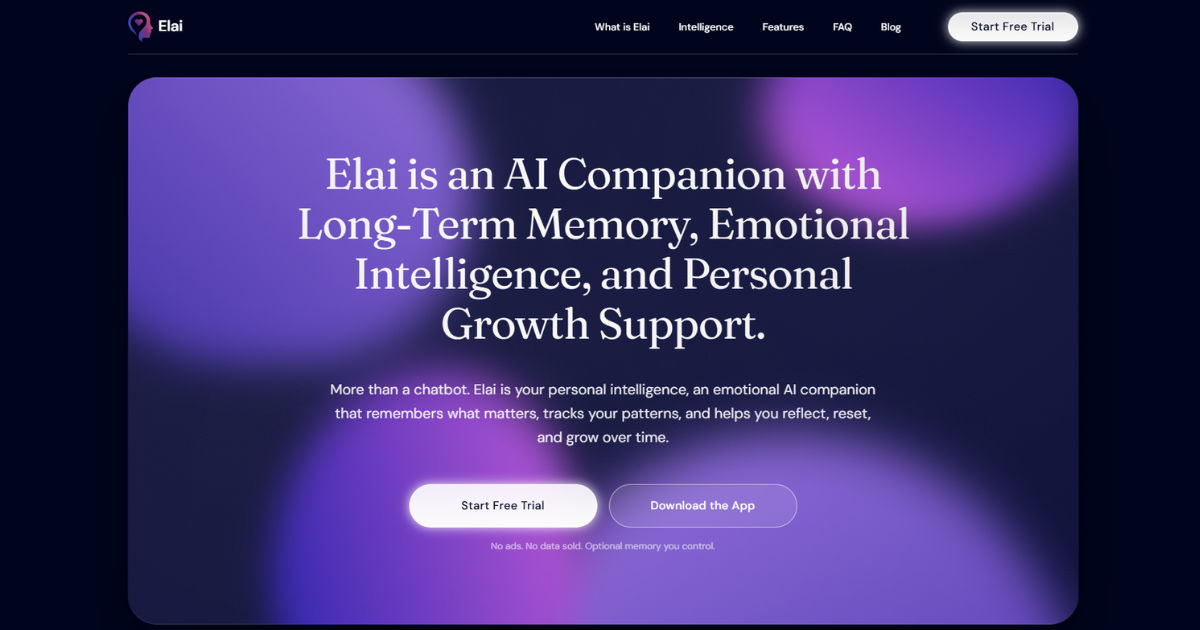 A Personal AI companion responds using artificial intelligence, machine learning, and natural language processing to understand what a user says and generate meaningful replies.
In today’s digital world, a Personal AI companion is becoming more common in education, customer service, mental health support, and daily life assistance.
This guide explains in detail how a Personal AI companion chatbot responds, how it understands human language, what technologies power it, and why it feels so human-like. The explanation is written in simple language so that even a 12th-grade student can easily understand the concept.
What Is a Personal AI Companion Chatbot?
A Personal AI companion chatbot is a software program that simulates human conversation. It can talk to users through text or voice and respond in a helpful and engaging way.
Unlike traditional chatbots, a Personal AI companion is not limited to fixed answers. Instead, it learns from data, context, and user behavior.
A Personal AI companion can:
- Answer questions
- Provide emotional support
- Help with tasks
- Hold casual conversations
- Learn user preferences over time
The goal of a Personal AI companion is to feel natural and human-like.
How Does a Personal AI Companion Understand Human Language?
To understand how a Personal AI companion responds, we first need to know how it understands language.
Natural Language Processing (NLP)
A Personal AI companion uses Natural Language Processing to break down human sentences into meaningful parts.
For example, if you say:
“I feel sad today”
The Personal AI companion identifies:
- Emotion: sadness
- Intent: emotional expression
- Context: user’s mental state
This helps the Personal AI companion decide how to respond appropriately.
Tokenization Process
A Personal AI companion breaks sentences into smaller pieces called tokens.
For example:
“I love learning AI”
Becomes:
“I / love / learning / AI”
This allows the Personal AI companion to analyze each word individually.
Context Understanding
A Personal AI companion does not only read words—it understands context.
For example:
- “I’m cold” can mean temperature or emotion
- “I’m running late” means delay, not exercise
The Personal AI companion uses context to decide meaning correctly.
How Does a Personal AI Companion Generate Responses?
Once a Personal AI companion understands input, it generates a response using AI models.
Machine Learning Models
A Personal AI companion is trained on large datasets containing conversations, books, websites, and dialogues.
This training helps the Personal AI companion learn:
- Grammar
- Sentence structure
- Human behavior patterns
Predictive Text Generation
A Personal AI companion predicts the next word in a sentence.
For example:
Input: “How are you”
The Personal AI companion predicts:
“I am fine, thank you”
It chooses the most suitable response based on probability.
Neural Networks
A Personal AI companion uses neural networks that mimic the human brain.
These networks allow the Personal AI companion to:
- Learn from experience
- Improve responses over time
- Handle complex conversations
Role of Context in Personal AI Companion Responses
Context is very important for a Personal AI companion.
Short-Term Context
A Personal AI companion remembers recent messages in a conversation.
Example:
User: “I like football”
Later: “Who is my favorite sport?”
The Personal AI companion remembers the context and answers correctly.
Long-Term Context
Some advanced systems allow a Personal AI companion to remember user preferences over time.
For example:
- Favorite food
- Interests
- Communication style
This helps the Personal AI companion personalize responses.
Emotional Intelligence in Personal AI Companion Chatbots
A modern Personal AI companion is designed to detect emotions.
Sentiment Analysis
A Personal AI companion analyzes whether a message is:
- Positive
- Negative
- Neutral
Example:
“I am very happy today” → positive
“I feel tired and sad” → negative
Empathetic Responses
A Personal AI companion responds with empathy.
For example:
User: “I feel stressed”
Personal AI companion: “I’m here for you. Want to talk about it?”
This makes the Personal AI companion feel supportive.
How Personal AI Companion Uses Knowledge Databases
A Personal AI companion may access large knowledge bases.
Pre-trained Knowledge
A Personal AI companion is trained on massive datasets that include:
- Books
- Articles
- Websites
- Conversations
This allows the Personal AI companion to answer general questions.
Real-Time Information (In Some Systems)
Some advanced versions of a Personal AI companion can access live data to provide updated answers.
Personalization in Personal AI Companion Chatbots
Personalization makes a Personal AI companion unique for each user.
Learning User Behavior
A Personal AI companion learns:
- What topics you like
- How you speak
- Your preferred tone
Adaptive Communication Style
A Personal AI companion adjusts its tone:
- Friendly
- Formal
- Emotional
- Casual
This makes conversations more natural.
Safety and Filtering in Personal AI Companion Responses
A Personal AI companion includes safety filters.
Content Moderation
A Personal AI companion avoids:
- Harmful content
- Offensive language
- Misinformation
Ethical Guidelines
A Personal AI companion follows rules to ensure safe communication.
It is designed to:
- Protect users
- Provide accurate responses
- Avoid harmful suggestions
Why Personal AI Companion Feels Human-Like
A Personal AI companion feels human-like due to:
Natural Conversation Flow
A Personal AI companion uses natural sentence structures.
Memory Features
A Personal AI companion remembers past interactions.
Emotional Awareness
A Personal AI companion responds with empathy and understanding.
Continuous Learning
A Personal AI companion improves over time using data feedback.
Applications of Personal AI Companion Chatbots
A Personal AI companion is used in many fields.
Education
A Personal AI companion helps students:
- Learn topics
- Solve problems
- Practice language
Mental Health Support
A Personal AI companion provides emotional support and guidance.
Customer Service
A Personal AI companion handles customer queries efficiently.
Daily Life Assistance
A Personal AI companion helps with:
- Reminders
- Planning
- Information search
Limitations of Personal AI Companion Systems
Even though a Personal AI companion is advanced, it has limitations.
Lack of True Emotions
A Personal AI companion does not feel real emotions.
Dependency on Data
A Personal AI companion only knows what it has been trained on.
Occasional Errors
A Personal AI companion may sometimes provide incorrect answers.
Future of Personal AI Companion Technology
The future of a Personal AI companion is very promising.
More Human-Like Interaction
A Personal AI companion will become more natural in conversations.
Better Emotional Understanding
A Personal AI companion will detect emotions more accurately.
Integration with Daily Life
A Personal AI companion will become part of:
- Homes
- Schools
- Workplaces
How Personal AI Companion Responds Step by Step
Here is a simple breakdown of how a Personal AI companion responds:
- User sends message
- A Personal AI companion analyzes text
- It identifies intent and emotion
- It searches knowledge base
- It generates response
- A Personal AI companion sends reply
This process happens in milliseconds.
Real Example Conversation with Personal AI Companion
User: “I am feeling nervous about exams”
A Personal AI companion:
“I understand that exams can be stressful. Try taking short breaks and revising step by step. You can do it!”
This shows how a Personal AI companion combines empathy and information.
Importance of Personal AI Companion in Modern Life
A Personal AI companion is important because it:
- Saves time
- Provides instant help
- Supports emotional well-being
- Improves productivity
A Personal AI companion is becoming a digital friend for many people.
Conclusion
A Personal AI companion chatbot responds using a combination of artificial intelligence, natural language processing, machine learning, and emotional analysis. It understands human language, interprets meaning, and generates relevant responses in real time. A Personal AI companion is not just a tool—it is designed to simulate human-like interaction and provide meaningful support in daily life.
As technology improves, a Personal AI companion will become even more intelligent, personalized, and emotionally aware. It will play a major role in education, healthcare, business, and personal life. However, it is important to remember that a Personal AI companion is still a machine, and while it can simulate understanding, it does not have real emotions or consciousness.
The evolution of a Personal AI companion shows how far artificial intelligence has come and how it continues to shape the future of human-computer interaction.