
When dealing with international matters—whether for business, travel, or legal affairs—it's often necessary to present official documents to foreign authorities. However, countries don't always recognize documents issued by foreign governments as valid. To address this issue, many nations have a solution: the Apostille certificate.
An Apostille is a specialized form of authentication for documents, which certifies their legitimacy in a foreign country. It's widely used in jurisdictions that are signatories to the Hague Convention of 1961, which simplifies the process of document verification between member countries. Understanding the apostille process is essential for anyone seeking to authenticate documents for international use.
What Is an Apostille Certificate?
An Apostille is essentially a certificate that authenticates the origin of a public document, including birth certificates, marriage certificates, diplomas, and court documents. It ensures that the document can be recognized and accepted in any of the countries that are part of the Hague Convention.
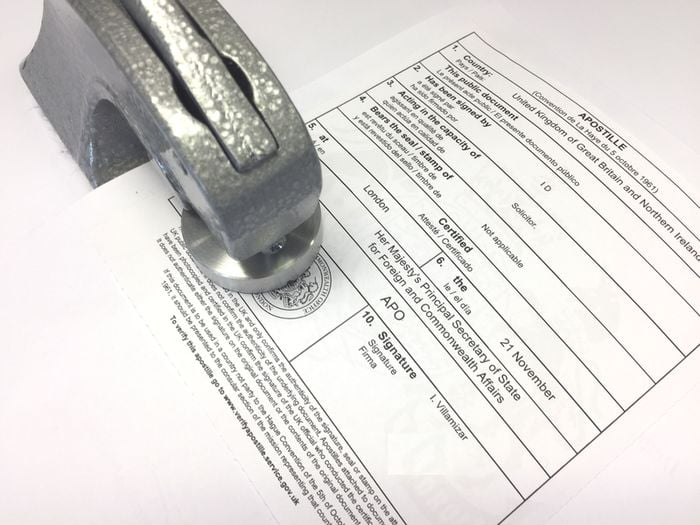
The Apostille is a single-page certificate that is attached to the original document. It contains key details, such as the type of document, the country of origin, the name of the person who signed it, and the date of certification. Importantly, the Apostille verifies that the signature, seal, or stamp on the document is legitimate, but it does not verify the content of the document itself.
Why Do You Need an Apostille?
The need for an Apostille arises when you must submit official documents to a foreign country. Without this certification, foreign governments may not accept documents as valid. For example, if you're applying for a visa, seeking employment in another country, or using documents for a legal procedure abroad, you may need an Apostille to ensure your documents are recognized.
The Apostille process eliminates the need for lengthy and complicated embassy legalization procedures, making international document authentication much faster and simpler. This is particularly useful for countries that have signed the Hague Convention, as it streamlines the document legalization process.
How to Obtain an Apostille
The process for obtaining an Apostille can vary depending on the country issuing the certificate. In general, the steps are as follows:
-
Prepare the Document: First, ensure the document you need to authenticate is an original or a certified copy. It should also be notarized if required by the country you're submitting it to.
-
Check the Requirements: Research the specific apostille requirements for the country where the document will be used. While most countries follow similar procedures, there can be some differences in the documentation required.
-
Submit the Document: Submit the document to the appropriate government office for authentication. In many countries, the authority responsible for issuing an Apostille is the Secretary of State or an equivalent government agency. This office will verify the document's authenticity and attach the Apostille.
-
Pay the Fees: There is typically a fee associated with obtaining an Apostille. Fees can vary based on the type of document and the country involved.
-
Receive the Apostille: Once the Apostille is issued, it will be attached to the document. This document is now officially certified for use in any country that recognizes the Apostille.
Countries That Accept the Apostille
The legalization cfg is accepted in countries that are members of the Hague Convention. As of 2025, over 120 countries are part of the convention, including major global players such as the United States, the United Kingdom, France, Japan, and Brazil. However, if you need to use a document in a country that is not part of the Hague Convention, the apostille will not be accepted, and you may need to go through the embassy legalization process.
Conclusion
In today's interconnected world, having the right documentation for international use is crucial. An Apostille simplifies this process, providing an efficient and recognized means of validating documents for foreign governments. Whether you're dealing with legal documents, business paperwork, or personal records, understanding the Apostille system ensures that your documents will be accepted in countries worldwide.