
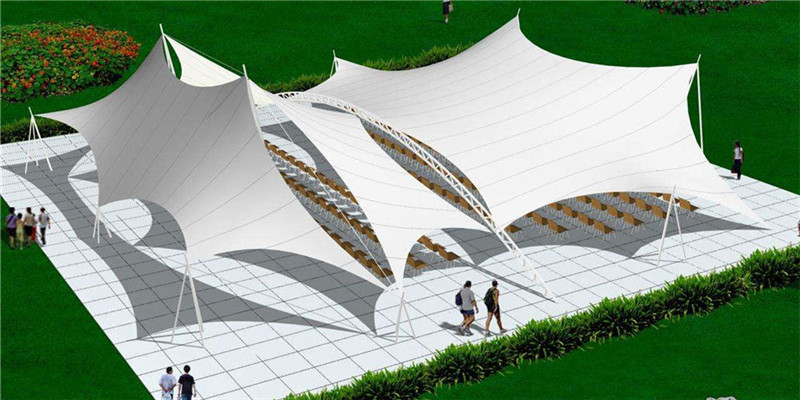
Tensile structures are an innovative form of architectural design that relies on tension rather than compression to create efficient, lightweight, and aesthetically striking buildings and canopies. These structures are primarily made of flexible materials like fabric, cable, and membrane that are stretched over a framework of support. The beauty of tensile structures lies in their ability to combine artistic elegance with engineering efficiency, offering an ideal solution for large-scale roofs, pavilions, and temporary structures. In this article, we’ll explore the different types of tensile structures and how they are applied in various architectural and engineering projects.
1. Tensile Fabric Structures
One of the most common types of tensile structures is the tensile fabric structure, which uses a combination of fabric and tensioned cables to create a stable, lightweight covering. These structures are typically made of materials like PVC-coated polyester, PTFE-coated fiberglass, or ETFE (ethylene tetrafluoroethylene) that are durable, weather-resistant, and capable of withstanding heavy loads. Tensile fabric structures are often used in sports arenas, exhibition halls, airports, and temporary event spaces.
The unique advantage of tensile fabric structures is their ability to create large, open spaces without the need for internal columns or supports. The tension in the fabric allows the structure to be both lightweight and strong, reducing the amount of material required and lowering costs. Their aesthetic appeal also makes them a popular choice for contemporary architecture.
2. Cable-Stayed Structures
Cable-stayed structures are a type of tensile architecture where cables are used to support a roof or a suspended platform. These structures consist of a network of cables, typically made of steel or other high-strength materials, that are anchored to masts or pylons. The cables create a web-like pattern of tension that distributes the weight of the roof evenly across the supporting elements.
These structures are commonly used in bridges, large roofs, and canopies. The Sydney Opera House and Heinz Field in Pittsburgh are iconic examples of cable-stayed tensile structures. The design offers both aesthetic appeal and functional strength, allowing for a wide span and minimal support interference.
3. Tension Membrane Structures
Tension membrane structures are one of the most versatile forms of tensile architecture, combining the use of flexible membranes and rigid support elements like beams or columns. The membrane is pulled tight over the frame, creating a taut, uniform surface that provides shelter from the elements. Tension membrane systems are often used in large-scale commercial projects, sports stadiums, and transportation terminals.
What sets tension membrane structures apart is their ability to create expansive, curved surfaces that can be adapted to a variety of building needs. These systems are often designed to be lightweight, with a focus on minimalism and sleek design, making them suitable for modern and dynamic architectural styles.
4. Pneumatic Structures
Pneumatic structures utilize pressurized air to maintain their shape, making them one of the most unique forms of tensile construction. The structure itself is composed of an airtight membrane, and internal air pressure provides the necessary tension to keep the structure inflated and stable. These structures are often used in temporary settings, such as emergency shelters, exhibition halls, or even inflatable domes.
While pneumatic structures offer flexibility in terms of design and quick construction, their main challenge is maintaining the required air pressure, especially in extreme weather conditions. However, their ability to create large, open spaces with minimal material usage makes them an attractive option for short-term projects.
5. Hyperbolic Paraboloid Structures
A hyperbolic paraboloid (HP) structure is a form of tensile architecture that is shaped like a saddle or double-curved surface. The shape of the structure is achieved by combining two intersecting curves that create a unique aesthetic. HP structures are typically made from steel or reinforced concrete with a tensioned membrane that forms the surface.
HP structures are known for their structural efficiency, as the shape distributes forces evenly throughout the surface. These structures are often used in large buildings, such as sports stadiums, auditoriums, and public pavilions, due to their ability to create large spans and visually striking designs.
Conclusion
الخيام represent a fascinating fusion of art, engineering, and technology. By using tension as the main force, they allow for the creation of efficient, lightweight, and aesthetically pleasing designs that are suitable for a wide range of applications. Whether it’s the fluidity of tensile fabric structures, the precision of cable-stayed systems, or the innovative approach of pneumatic constructions, these structures continue to redefine what is possible in modern architecture, pushing the boundaries of design and functionality.